
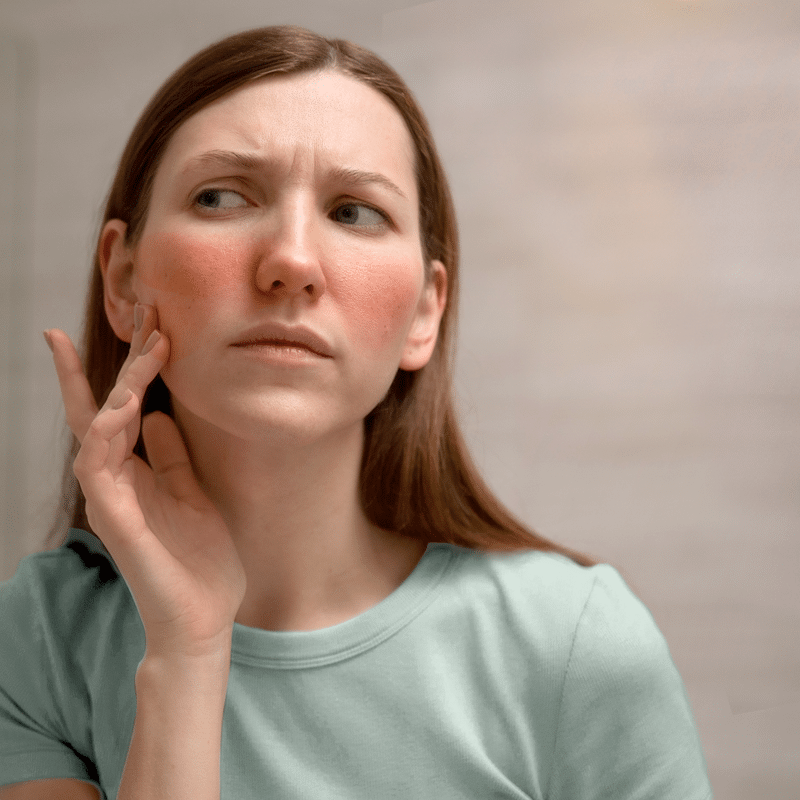
 Rosacea is a chronic inflammatory skin condition that most commonly affects the face and sometimes the neck. It is characterized by persistent redness, flushing, and visible blood vessels. For some individuals, it may also include acne-like bumps, skin sensitivity, and irritation.
Rosacea can develop in different ways and at various ages, but it is most frequently diagnosed in fair-skinned individuals. Women are commonly diagnosed during perimenopause and menopause. That said however, it can affect all skin types, both men and women and at younger ages.
Because early symptoms often resemble sensitive skin or adult acne, rosacea is commonly misunderstood — which can delay proper treatment.
What Causes Rosacea?
The exact cause of rosacea remains unknown, but research suggests it is likely due to a combination of factors, including genetics, an over reaction of the immune system in the skin, and a break down of the skin’s barrier function.
In rosacea-prone skin, the immune system tends to respond more aggressively to normal environmental triggers (like heat, hot or spicy foods) causing an inflammatory reaction. Blood vessels in the face are also more reactive, leading to flushing and persistent redness over time.
The Possible Role of Hormones
Although hormones are not considered a primary cause of rosacea, declining levels of estrogen and testosterone — especially during midlife — may influence symptom severity. Both of these hormones are responsible for maintaining circulation and metabolic function of the skin, as well as collagen production and how thick your skin is.
As hormone levels shift or decline, the skin can become thinner, more reactive, and more prone to inflammation. Increased immune reactivity and vascular instability can make flushing and redness more noticeable. This is one reason some women first notice rosacea symptoms developing or worsening during perimenopause and menopause.
Signs and Symptoms
Rosacea can vary significantly from one person to another, but it often follows a gradual progression. Early signs may include easy blushing or flushing that comes and goes, then persistent redness across the cheeks, nose, chin, or forehead can set in. As it progresses, you may notice visible blood vessels, red bumps or acne-like breakouts. This inflammation can then cause burning, stinging, or heightened skin sensitivity, and dry or rough skin texture.
In some cases, rosacea can also affect the eyes and eyelids, leading to irritation, dryness, or a gritty sensation — a condition known as Ocular Rosacea.
Because symptoms overlap with other skin conditions, proper diagnosis is important to ensure appropriate treatment.
Common Triggers
Rosacea-prone skin is highly reactive. Certain environmental and lifestyle factors can trigger flares, including caffeine, spicy foods, alcohol and stress. Other triggers include sun exposure, hot weather and humidity – which makes it very challenging to live in Texas!
Triggers vary from person to person, which is why identifying your specific patterns is a key part of management.
Why Early Management Matters
Rosacea is a chronic condition, meaning it cannot be cured — but it can absolutely be managed! Without treatment, redness can become more persistent, blood vessels more visible, and inflammation more difficult to control. Early recognition and intervention can help reduce flare frequency, minimize progression and improve overall skin comfort.
Bottom Line
If you are experiencing persistent facial redness, flushing, or increased sensitivity, it may be more than just “sensitive skin.” Contact our office at 972-608-0808 to schedule a dermatology consultation in Plano, TX to help you create a Personalized Action Plan for managing rosacea.